Showrooms, offices and warehouses
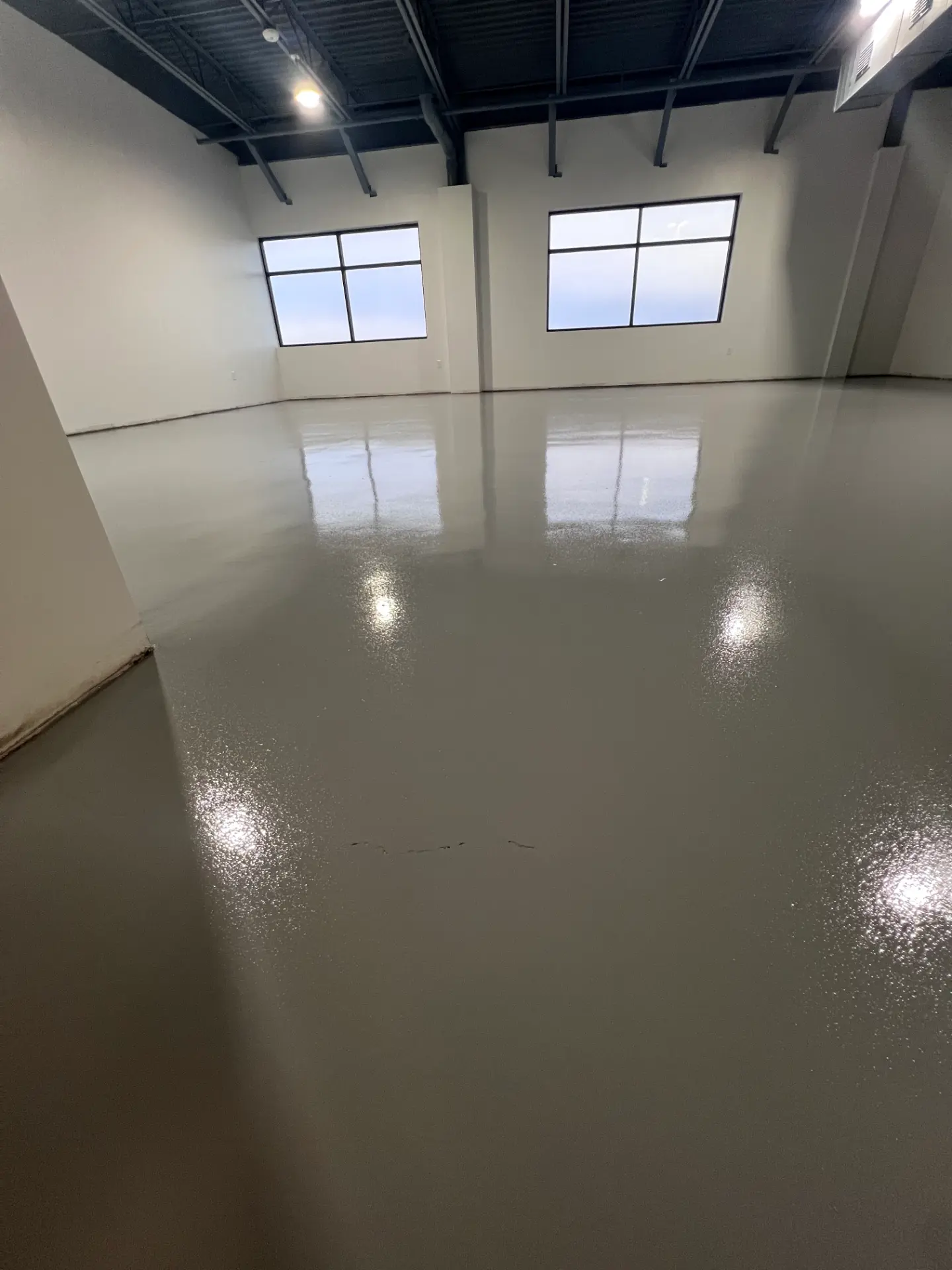
Slabs polished into the finished floor.

Services · Polished Concrete
Your slab, ground and polished into the finished floor. No coating on top to peel or wear through, and a straight answer on how well your slab will take it.
Slabs polished into the finished floor.
Every job is fully insured.
Our small team of in-house installers.
The problem
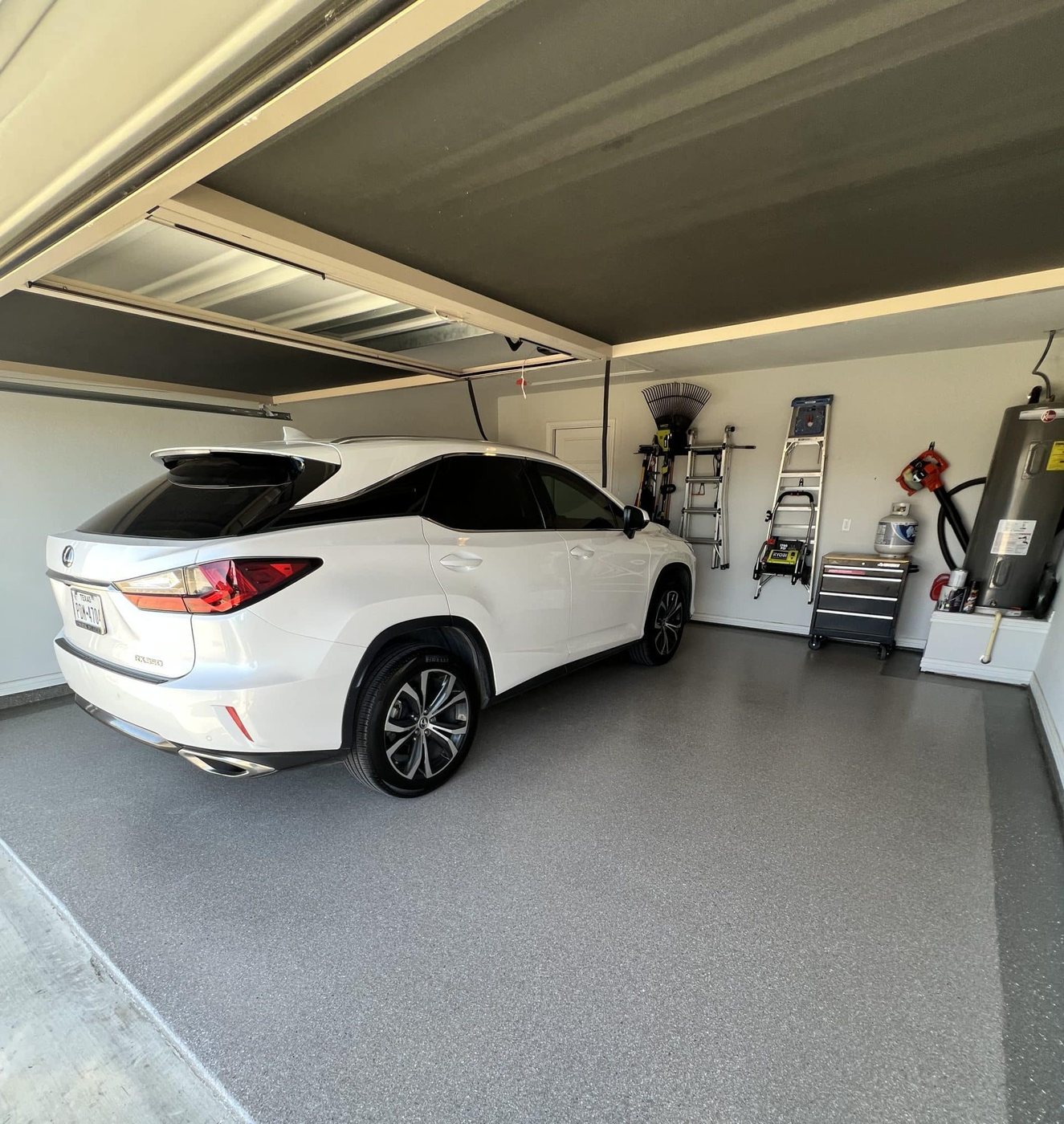
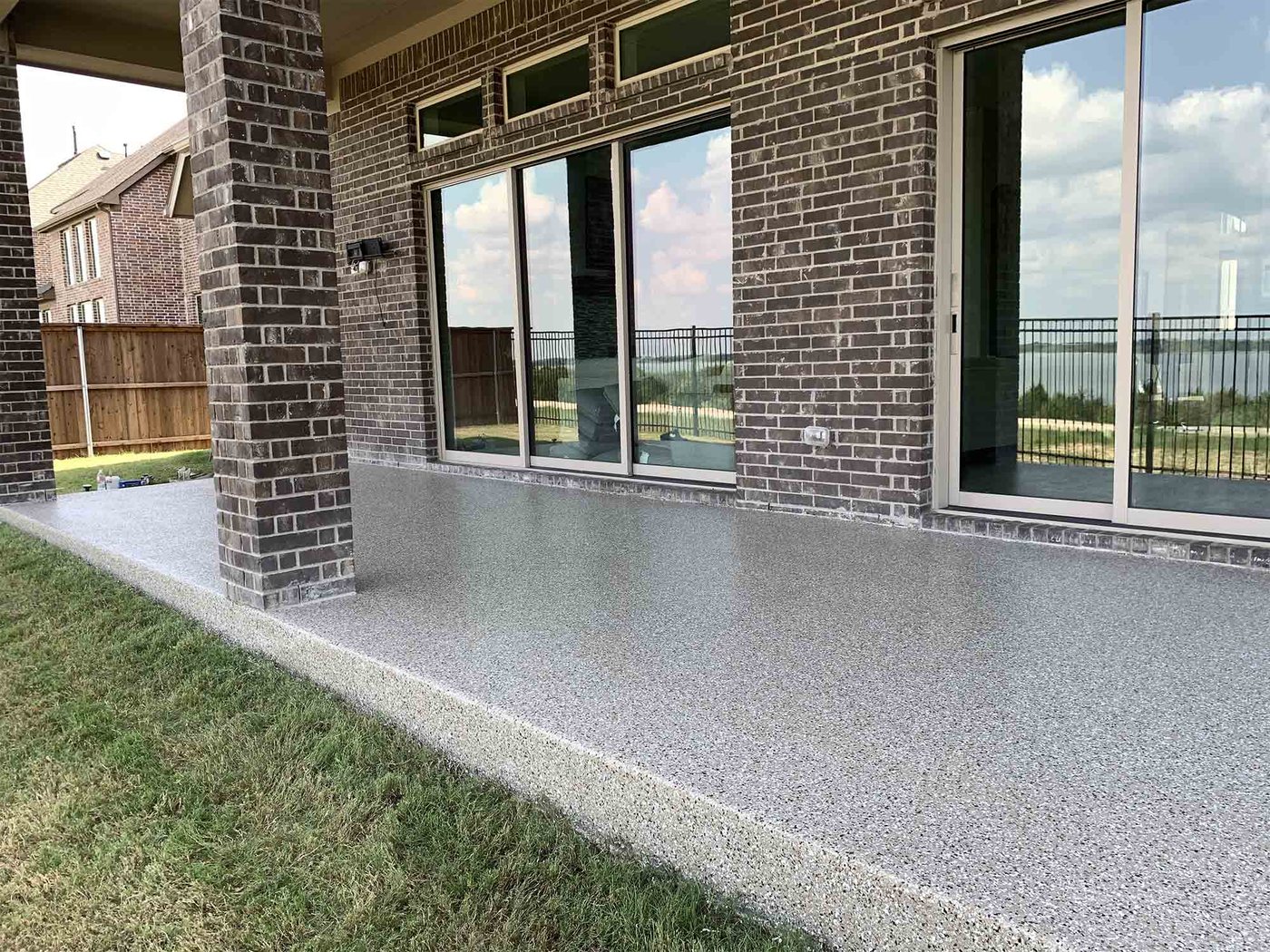
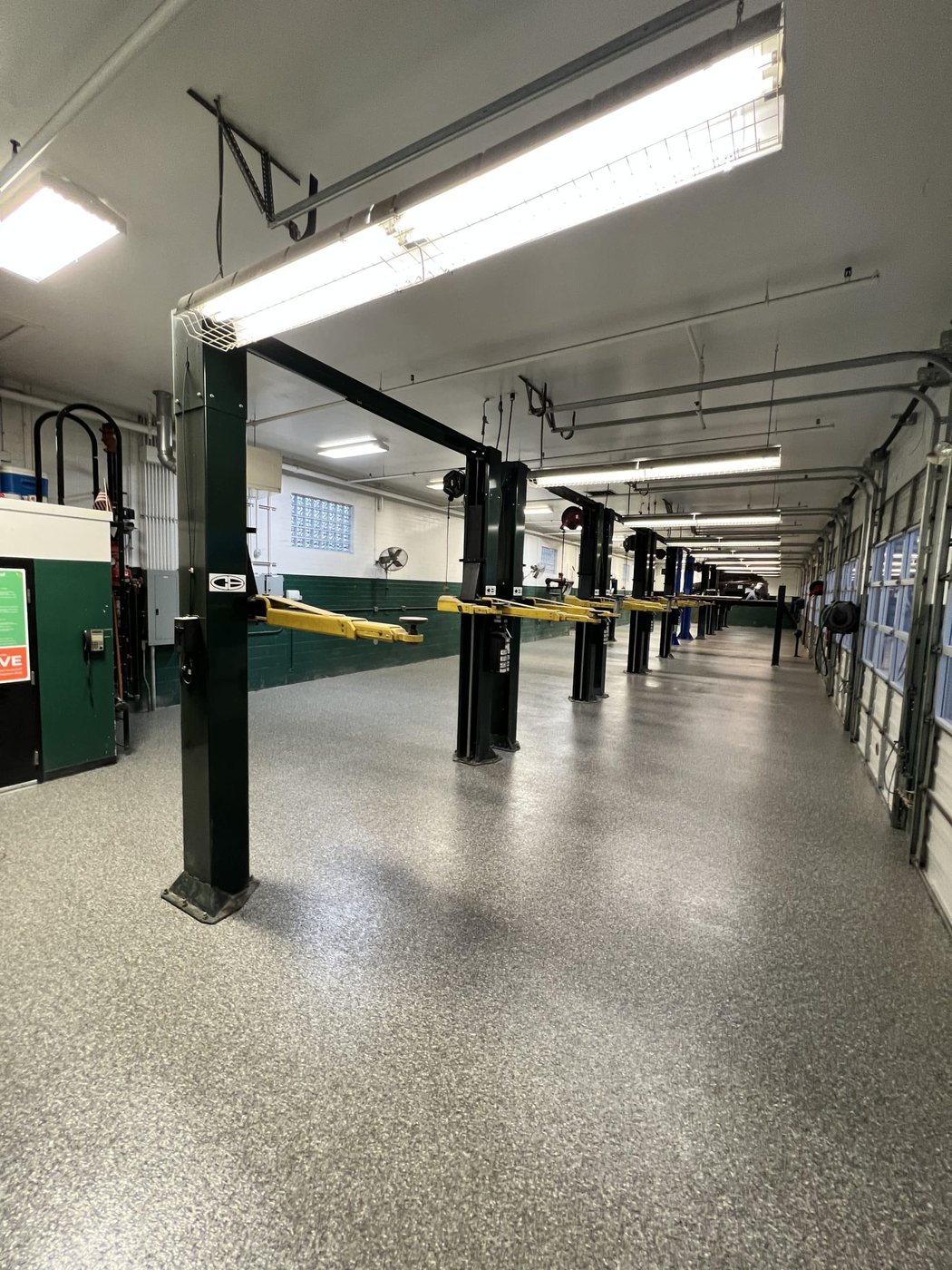
Some floors are hard on coatings. Pallet jacks, rolling racks and steady foot traffic can wear a lane through a topcoat, and then the floor needs recoating. A plain slab has the opposite problem: it sheds dust onto shelves and stock, soaks up spills, and looks unfinished in a space customers walk through. Polishing works the slab itself into the finished surface, so there is no film to scratch through or peel. It is not right for every floor. Slabs with heavy patching, wide cracks or old glue can show every flaw once polished, which is why we look at the concrete before recommending it.
The complete system
Concrete polishing at Classic, for businesses across Dallas and its suburbs, starts with the slab, not the sales pitch. We look at its age, hardness, cracks, patches and any old coating or adhesive, then tell you if polishing will give you the floor you want or if a coating would serve you better. When it is a fit, the crew grinds the surface flat, refines it in stages until it holds a shine, and hardens and protects it. The result is the slab you already own, finished. Our installers are trained in-house and work for us, not for a subcontractor, and we plan the job around the hours your space has to stay open.
We test how hard the concrete is, map cracks, joints and patches, and look for old coatings, glue or sealers that have to come off. If the slab will not polish well, we say so and explain why.
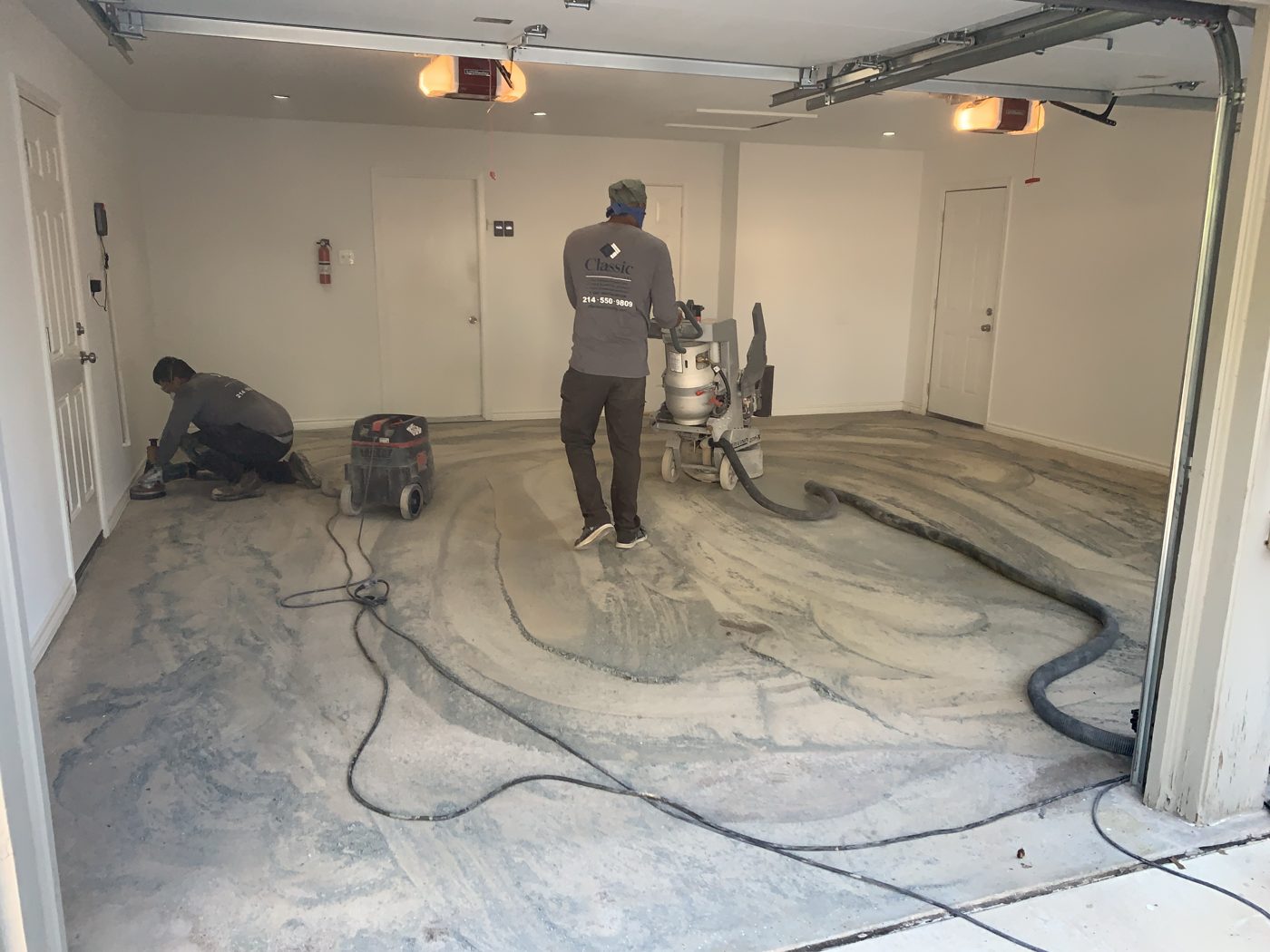
The floor is ground with diamond tooling to open the surface, then refined with progressively finer passes until it starts to reflect light.
A densifier soaks into the concrete and hardens the surface, which helps it take the polish and resist wear and dusting.
You choose how much shine you want, from a soft satin to a high gloss, and how much of the stone in the concrete shows. A guard goes on last to help the floor resist stains.
Cracks and joints are filled before polishing. Patches stay visible in a polished floor, and we show you where they will be before you decide.
Polished concrete is maintained with regular dust mopping and a neutral cleaner, and we leave you written care steps. Price depends on the slab's condition and the finish you choose, which the pricing section explains.
Why trust DFW Classic
Polishing shows the slab as it is. If yours has heavy patching or damage that will show, we tell you before you pay, and we also install coatings, so we have no reason to push one option.
Satin, semi-gloss or high gloss, with more or less of the stone showing. You see the options before the grinding starts, so the floor matches the space.
Showrooms and offices cannot close for long. The schedule is set around your hours and done in sections where the space allows.
The people grinding your floor are our in-house installers, not day labor, backed by $1 million in liability coverage.
Fast and easy
We test hardness, map cracks and patches, and check for old coatings or glue. You hear plainly if the slab is a good fit for polishing.
Choose the sheen and how much stone shows. The written scope lists the areas, the finish and the schedule.
The crew removes old material, grinds the floor flat, and refines it in stages.
A densifier hardens the surface, the final passes bring up the shine, and the guard goes on last.
We walk the floor with you, then leave written care instructions for your cleaning crew.
Straightforward pricing
Concrete polishing in Dallas is quoted after we see the slab, because the slab's condition drives the cost more than square footage does. A clean, sound floor in a new building goes faster than an older one with glue, coatings or patches that have to come off first.
The variables are square footage, removal of old coatings or adhesive, crack and joint repair, the sheen you want (higher gloss takes more passes), how much aggregate you want exposed, and access, including if the space stays open during the work.
You get one written price before work starts, with no hourly billing. If the assessment shows a coating would cost less or hold up better on your slab, we quote that too so you can compare.
Your space can work better
Book a free slab assessment, and you'll know if polishing or a coating is the better floor for your space.
Explore more
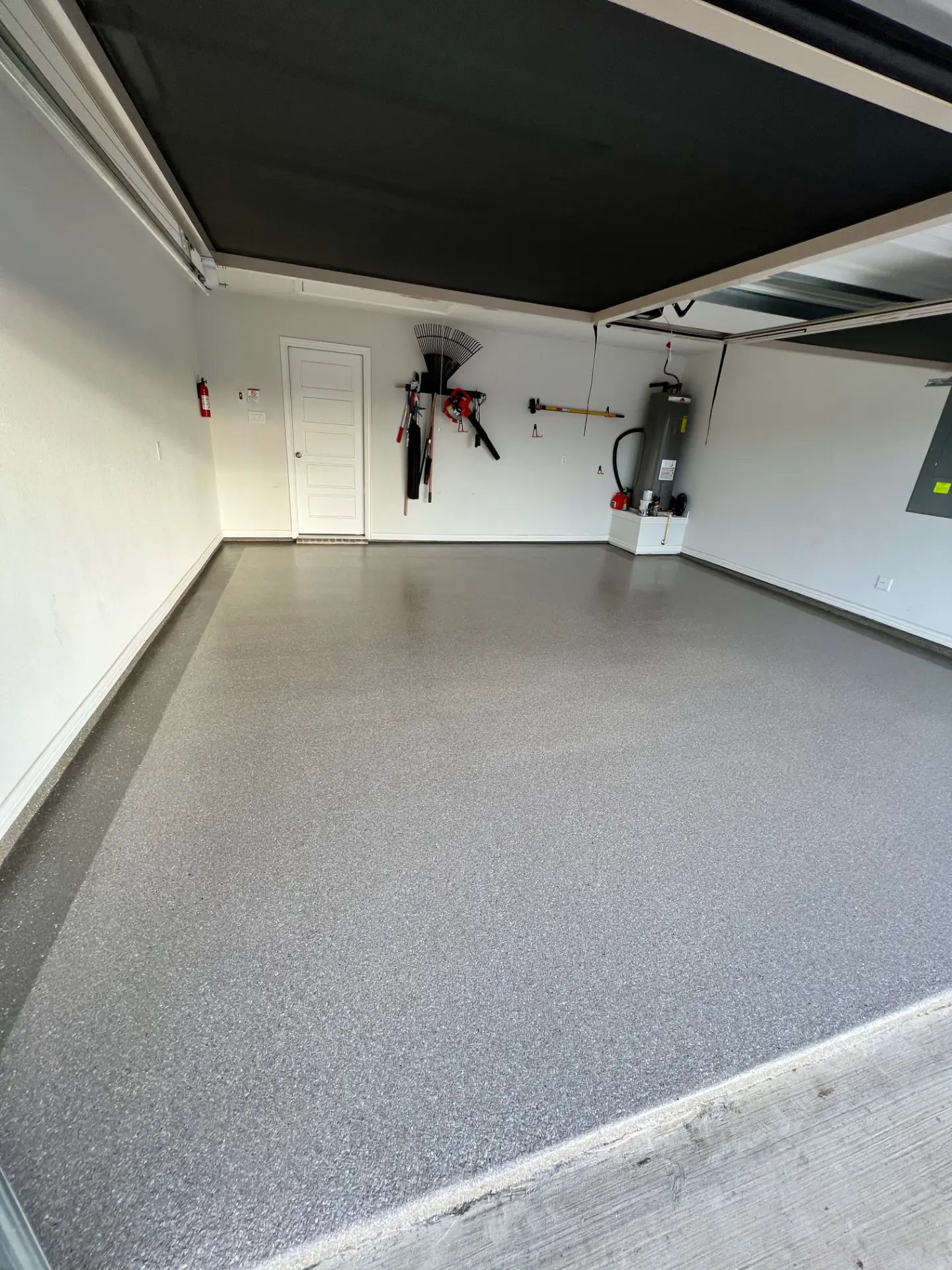
When a slab is too patched or damaged to polish well, a commercial epoxy system gives it a new surface instead.
Learn more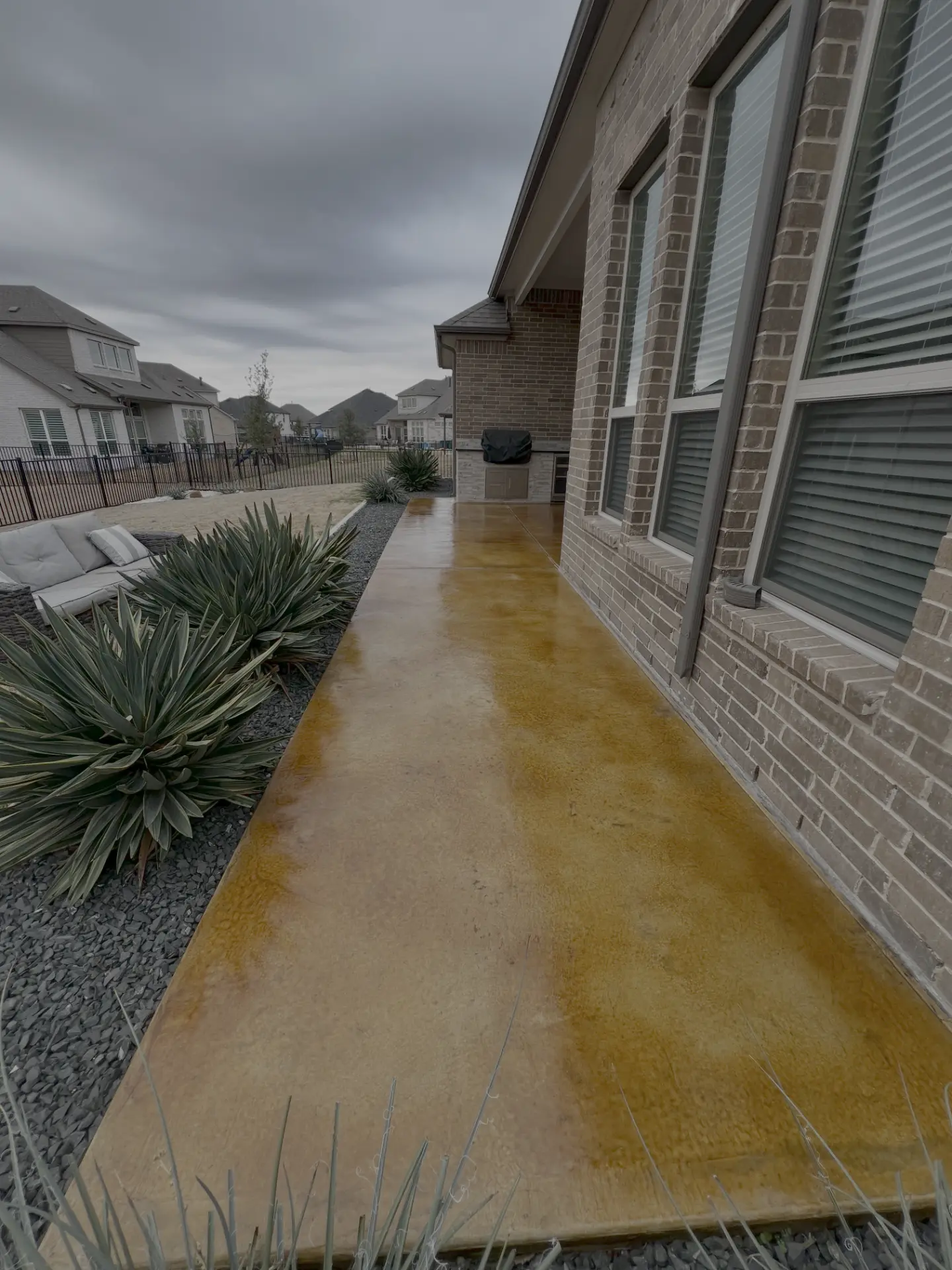
A clear sealer protects bare concrete from water and stains when the slab does not need grinding or a new look.
Learn more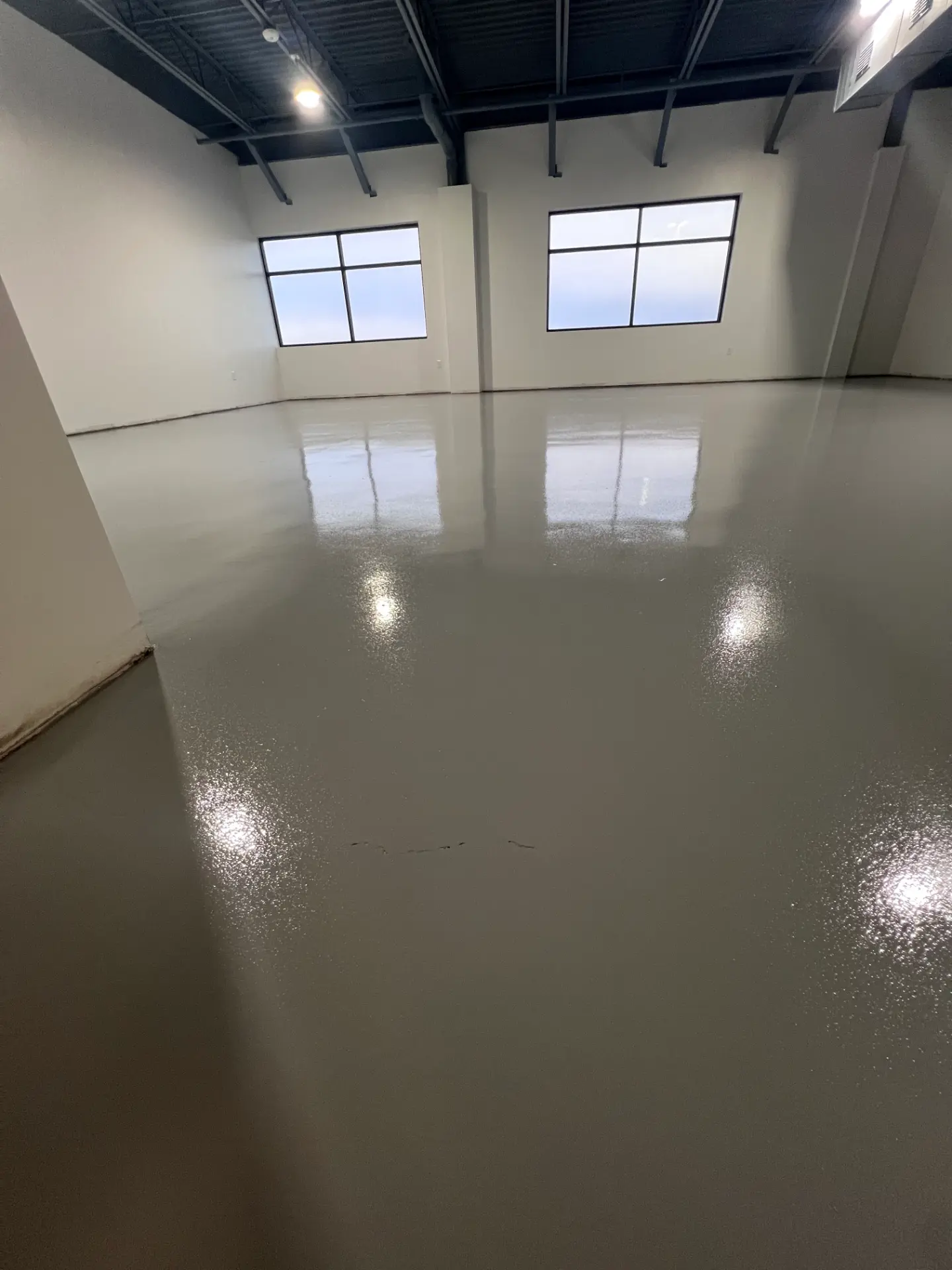
Warehouse floors with forklift traffic, aisle lines and racking, coated or polished to suit the work.
Learn moreGarland-based. DFW-wide.
Our crews work out of the Garland shop and polish showroom, office and warehouse floors in Garland, Dallas, Irving, Richardson, Plano, Frisco, McKinney, Allen, Mesquite and Rockwall.
Questions? Call us
214-550-9809Helpful answers
Concrete polishing usually takes a few days, depending on the floor's size, its condition and how much shine you want. Removing glue or an old coating adds time at the start, and a high-gloss finish takes more passes than satin. Your written scope lists the dates for every area of the floor.
The cost of concrete polishing in Dallas depends mostly on the slab. Square footage sets the base, then old coating or glue removal, crack repair, the sheen level and aggregate exposure add to it. We quote after assessing the slab for free, and the written price does not change unless you change the scope.
Your floor is a good candidate for polished concrete if the slab is sound, without wide cracks, heavy patching or damage you want hidden. Polishing finishes the concrete you have, so patches and old repairs stay visible. If the slab will not polish well, we tell you at the assessment and suggest a coating instead.
Concrete polishing is not a same-day service. We assess the slab, agree on the finish in writing, and then schedule the crew. Once the work starts, small spaces can be finished in a short window; larger floors are done in sections.
Polished concrete suits a sound slab in a space where you want no coating to wear through, such as a showroom or office. Epoxy suits floors that need a new surface, chemical resistance or color, and slabs too damaged to polish well. We install both, so the recommendation comes from your slab, not from what we sell.
Polished concrete is no more slippery than many smooth floors when it is dry and clean, but water, oil or dust on any smooth floor reduces grip. In entries, kitchens and wet areas, matting or a lower sheen helps. We talk through where people walk in wet conditions before choosing the finish.
Yes, old tile adhesive, carpet glue and failed coatings are ground off as part of the job, and the removal is priced in the scope. What we cannot remove is the mark some glues leave in the concrete, so we check a test area first and show you what the floor will look like.