
Garage floors
Polyurea vs Polyaspartic: Which Garage Floor Coating Belongs in a Dallas Home?
Polyurea vs polyaspartic garage floors in Dallas, TX: how they differ, where each belongs and why we use both. Free quote: (214) 550-9809.
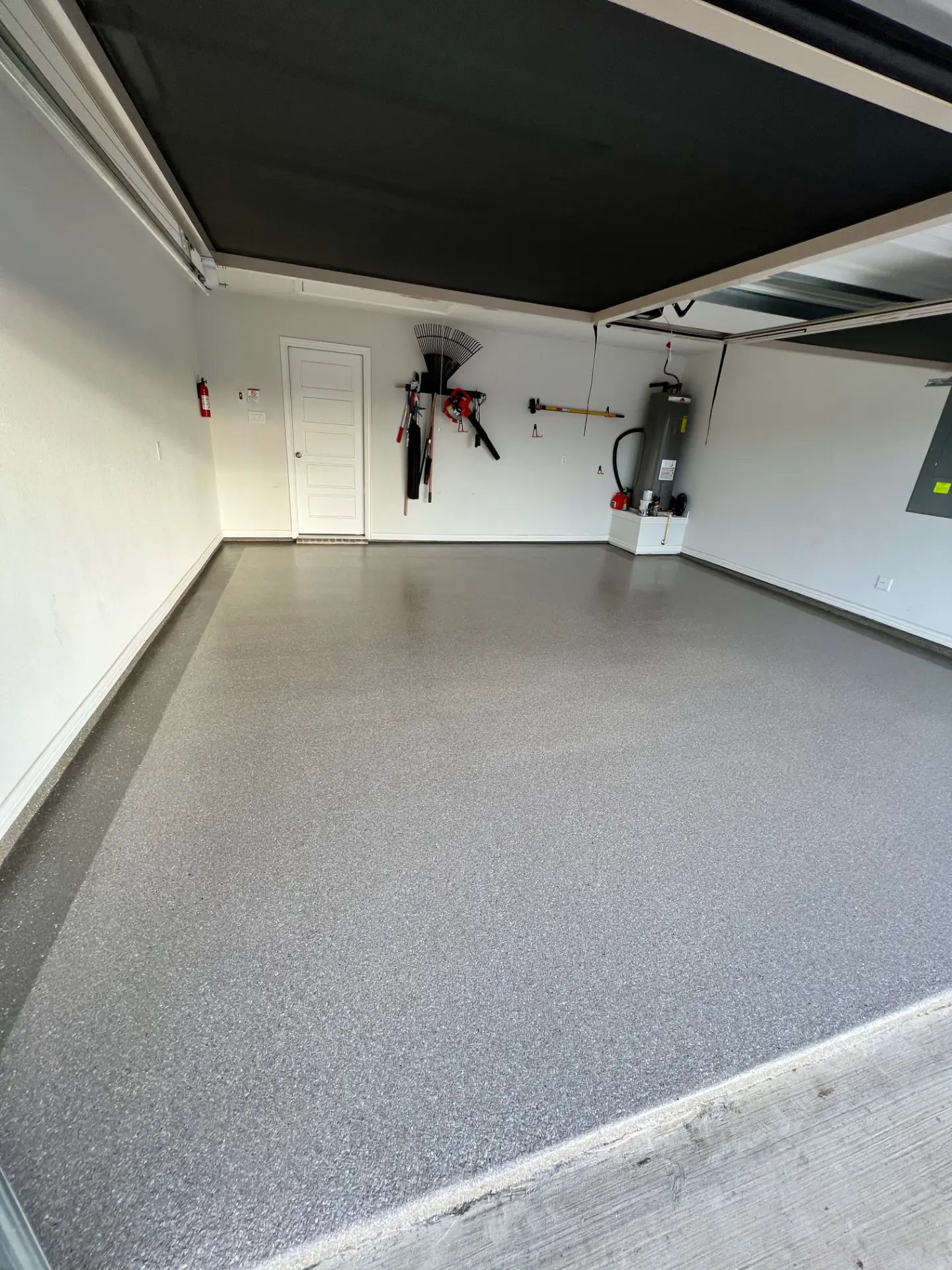
Polyurea vs polyaspartic sounds like a choice between two rival products, but on many garage floors you get both. Polyaspartic is a modified form of polyurea, and the two tend to do different jobs in the same system. We install a polyurea base and a polyaspartic topcoat on residential garages across Dallas, from Lake Highlands and Lochwood to Forest Hills and Lakewood. A Dallas floor has to hold up to summer sun and hot tires while its slab may move on clay soil. Here's how the two differ, what each one's drawbacks are, and what to ask before you sign a Dallas quote.
What's the Difference Between Polyurea and Polyaspartic?
Polyaspartic is a type of polyurea. Coatings in this family can be formulated for different application speeds and exposure conditions. In our residential garage system, the polyurea is the base coat and the polyaspartic is the clear topcoat. The product specification—not the family name alone—determines working time, cure time and UV performance.
The comparison below describes the roles in our garage-floor system, not a specification for every product sold under these names. Ask your installer for the technical data for the actual base and topcoat.
| What to compare | Polyurea | Polyaspartic |
|---|---|---|
| What it is | A coating family | A modified form of polyurea |
| Where we use it | Base coat against prepared concrete | Clear topcoat over decorative flake |
| Main job | Bonding and flexibility | Sealing the flake and taking daily wear |
| Working and cure times | Check the specific product data | Check the specific product data |
| Sunlight exposure | Confirm the base formulation with the installer | UV-stable topcoat in our garage system |
What Is Polyurea Floor Coating?
Polyurea is a two-part coating that bonds to prepared concrete and stays flexible after it cures. That flexibility is why we use it against the slab in Dallas garages. No coating stops structural slab movement or repairs a foundation problem.
Application speed varies by formulation, so ask about the actual product rather than assuming every polyurea has the same working window. Surface preparation and experienced installation matter. Our guide on polyurea vs. epoxy for garage floors goes further into how it compares with older systems.
What Is Polyaspartic Floor Coating?
A polyaspartic floor coating is a modified polyurea. It's commonly used clear over flake, and it can also be applied pigmented. The specific formulation determines its application window and UV performance.
As the top layer, it takes the daily wear. Our UV-stable polyaspartic topcoat locks in the flake and helps protect the surface from hot tires and chemical spills. We pair it with a polyurea base. Our older post on epoxy vs. polyaspartic garage floors covers how it stacks up against epoxy. Working time during installation is not the same as the time before a finished floor can be used.
Why Many Dallas Garage Floors Use Both
A combined system lets each coating do what it's good at: a polyurea base for bonding and flexibility, and a polyaspartic topcoat for protection. Here's how our garage floor coating system in Dallas goes down, usually in one day.
You can walk on it at 12 hours, move heavy items back at 24 hours and park at 48 hours. These are our residential garage return-to-use times, not generic working times for all polyurea or polyaspartic products. Larger or more complex jobs can take longer to install.
- Diamond grinding. We grind the whole slab to remove old grease stains and surface contaminants for optimal adhesion and a lasting, durable finish. Crack and hole repairs are part of coating preparation.
- Polyurea base. The base goes on the prepared slab.
- Full flake. Color flake is broadcast into the wet base.
- Polyaspartic topcoat. A clear coat seals the flake and takes the wear.
Polyurea and Polyaspartic on Dallas Slabs
Dallas soil, heat and housing are reasons to look at the whole system rather than treat this as an either-or choice.
Clay soil calls for attention to slab movement. The Soil Survey of Dallas County rates its Houston Black-Heiden clays very high for shrink-swell. Expansive soils can contribute to hairline and settlement cracks. No coating stops a slab from moving; growing cracks or foundation concerns need separate evaluation.
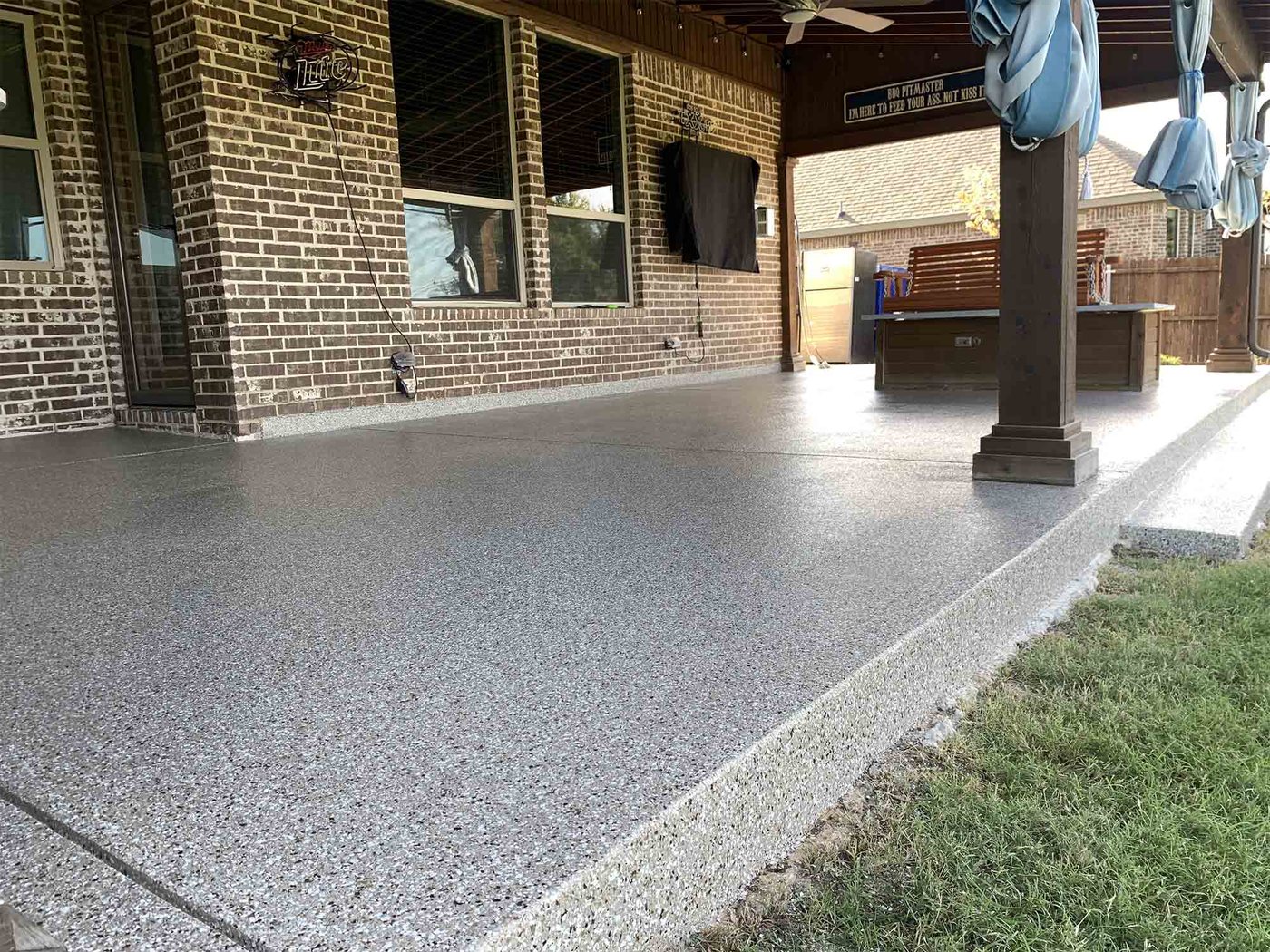
Heat and sun call for a stable topcoat. Normal highs at DFW are near 96 degrees in July and August. A garage door left open on a west-facing Dallas home lets afternoon sun reach the floor. Exposure also matters on patio coatings in Dallas, so the location of each surface belongs in the discussion.
Older slabs call for prep first. Neither coating fixes bad preparation. A garage in Merriman Park, Lochwood or Forest Hills may hold oil, worn patches and old paint, but a neighborhood or the age of a house doesn't tell us the condition of its garage. On our concrete coatings in Dallas, we inspect the actual slab and grind down to sound concrete before anything goes on.
Want to see the layers on your own Dallas floor? Call Classic Concrete Coatings at (214) 550-9809 or book a free garage floor visit in Dallas. Nick or Jeff will check your slab, show you flake samples under your garage lights and explain the system in plain terms.
What Is Better Than Epoxy for a Dallas Garage Floor?
For our residential garage projects, we use a polyurea base with a polyaspartic topcoat. Comparing a complete system is more useful than comparing material names alone. The condition of your concrete, preparation and intended use all matter. If price is part of your decision, see our breakdown of garage floor coating cost in Dallas.
The name on the can matters less than people expect, and prep matters more. Ask how the installer will create a sound bond instead of simply rolling a new coating over unground concrete. Once a floor is in, our guide to maintaining a polyurea garage floor covers the routine.
Questions to Ask a Dallas Installer
Coating labels can be loose, so ask for specifics in writing:
- What's the base, and what's the topcoat? “Polyurea floor” may describe only one layer.
- Is the topcoat UV stable? It matters most near an open door.
- Will the flake fully cover the base? That changes how much of the base you'll see.
- How is the slab prepared? Ask about diamond grinding and how cracks are filled.
- When can I park on it? Get the time in writing. Our residential garage schedule is 48 hours.
- What does the warranty cover? Ask for the written terms, coverage and exclusions for your specific project.
Frequently Asked Questions
What are the disadvantages of polyaspartic coating?
It takes experience to apply well, and it relies on good prep. A floor that isn't ground properly can still fail. Product cost, working time and cure time vary by formulation, so compare the complete installed system. On our Dallas residential garage floors, we use it as a topcoat over a polyurea base.
What are the disadvantages of polyurea coating?
Working time and UV performance depend on the formulation. Ask for the specific product data and how the base will be protected. It's best left to an experienced crew, and it needs properly ground concrete underneath.
Can you use polyurea and polyaspartic together?
Yes. We use a polyurea base, full color flake and a clear polyaspartic topcoat on residential garage floors across Dallas. The base handles flexibility and bonding, and the topcoat handles daily wear and sun exposure.
How much does it cost to polyurea a 2-car garage in Dallas?
Your price depends on square footage, slab condition and the complete coating system. We quote each Dallas garage after a free visit, with one written number. For a starting point, our garage floor coating cost guide explains clearly attributed national estimates; those figures are not Classic's prices or a Dallas quote.
What is the strongest garage floor coating?
There isn't one answer, because strength depends on the job. Flexibility, abrasion resistance, chemical resistance and bond all matter, and prep affects each one. For a home garage on Dallas clay, we'd look at the whole system rather than a single material.
The Bottom Line
In the polyurea vs polyaspartic question, you often don't have to pick one. Polyurea gives our garage-floor system a flexible, well-bonded base, and polyaspartic gives it a UV-stable surface that takes the wear. On Dallas clay, with garage doors open to the afternoon sun, the complete system and its preparation deserve more attention than the label alone.
Classic Concrete Coatings is owner-run, based next door in Garland since 2018, with a small team of in-house installers. Call (214) 550-9809 or request your free garage floor quote. We serve Dallas homeowners from Lake Highlands and Lochwood to Casa Linda Estates, Forest Hills and Lakewood.
Classic Concrete Coatings · 106 N Shiloh Rd Ste 400, Garland, TX 75042 · (214) 550-9809